The Festivals of the Lord are not just ancient observances—they are a prophetic framework revealing God’s complete plan of redemption for His people. From Passover to Tabernacles, each feast points to a specific work of Messiah and unfolds in its appointed time. These divine appointments unlock the structure of prophecy. Without this understanding, the timeline of end-time events cannot be properly discerned.

Understanding how God’s appointed times reveal His plan of redemption.
The biblical festivals are not just ancient observances—they form a prophetic pattern pointing to the ultimate promises of God and the restoration of all things. To understand what lies ahead, we must first understand what these feasts have already revealed.

Festival Typology Series

This playlist explores the prophetic meaning behind the biblical festivals and how they point to the Messiah. This five-part series consists of the following videos: 1.       Festival Typology – First Month Feasts (#1, click video above to watch):  https://www.youtube.com/watch?v=KfpudXbxYGk&list=PLW6xH0d9jaMqDRp8SJknjc4fmjGkYJ_2H 2.       Festival Typology, Part 2: Passover to Pentecost https://www.youtube.com/watch?v=S80V5jHga7g&list=PLW6xH0d9jaMqDRp8SJknjc4fmjGkYJ_2H&index=2 3.       Festival Typology, Part 3: Day of Atonement https://www.youtube.com/watch?v=HEuojOP-ZBw&list=PLW6xH0d9jaMqDRp8SJknjc4fmjGkYJ_2H&index=3 4.       Festival Typology, Part…
Read More Festival Typology Series

The Lord’s Day

Understanding the Prophecy The phrase “the Lord’s Day” is often assumed to refer to Sunday—but Scripture itself never makes that claim. Instead, the Bible identifies a specific day that belongs to the Lord: the Sabbath. In Mark 2, Yeshua makes a defining statement: “The Son of Man is Lord also of the Sabbath.” This is…
Read More The Lord’s Day

Daily and weekly time with God shapes the rest of our walk with Him. The morning and evening sacrifices remain God’s design for daily fellowship, and Scripture shows these are also the times when many of His most significant interventions occurred: fire on Elijah’s altar, Gabriel’s visit to Daniel, the crucifixion, the outpouring of the Holy Spirit. Yeshua is now our sacrifice, but the worship rhythm remains. The Sabbath carries the same pattern at a weekly scale — real relationships are built in time set apart.

The Lord’s Day

Understanding the Prophecy The phrase “the Lord’s Day” is often assumed to refer to Sunday—but Scripture itself never makes that claim. Instead, the Bible identifies a specific day that belongs to the Lord: the Sabbath. In Mark 2, Yeshua makes a defining statement: “The Son of Man is Lord also of the Sabbath.” This is…
Read More The Lord’s Day

A Call to Remember

Understanding the Prophecy This teaching presents a powerful call to remember—a theme woven throughout Scripture, especially in the context of end-time prophecy. God repeatedly calls His people to: In contrast, end-time deception works by causing people to forget—to drift away from truth, obedience, and the authority of God. Revelation reveals that the final crisis is…
Read More A Call to Remember

The spring feasts are not fulfilled events neatly check off at the cross. Yeshua’s own words at the Last Supper make this clear: He declared He would not eat the Passover again until it is fulfilled in the Kingdom. These studies explore what that forward-pointing fulfillment actually looks like – and why getting it right reshapes everything we think we know about His return. Explore the teachings below.

Fulfillment of the Spring Feasts: Passover, Unleavened Bread, and Firstfruits

Understanding the Prophecy The biblical festivals are not random religious celebrations. They are appointed times established by God that reveal key events in His plan of redemption. Among these festivals, the spring feasts hold special significance because they point directly to both the first and second coming of the Messiah. Passover, the Feast of Unleavened…
Read More Fulfillment of the Spring Feasts: Passover, Unleavened Bread, and Firstfruits

Pentecost marks the outpouring of God’s Spirit and the empowerment of His people to carry His truth to the world. From the delivery of Torah at Sinai and the outpouring of the Holy Spirit in Acts 2, this feast reveals the internalization of God’s Word written on our hearts.

Timing of Pentecost

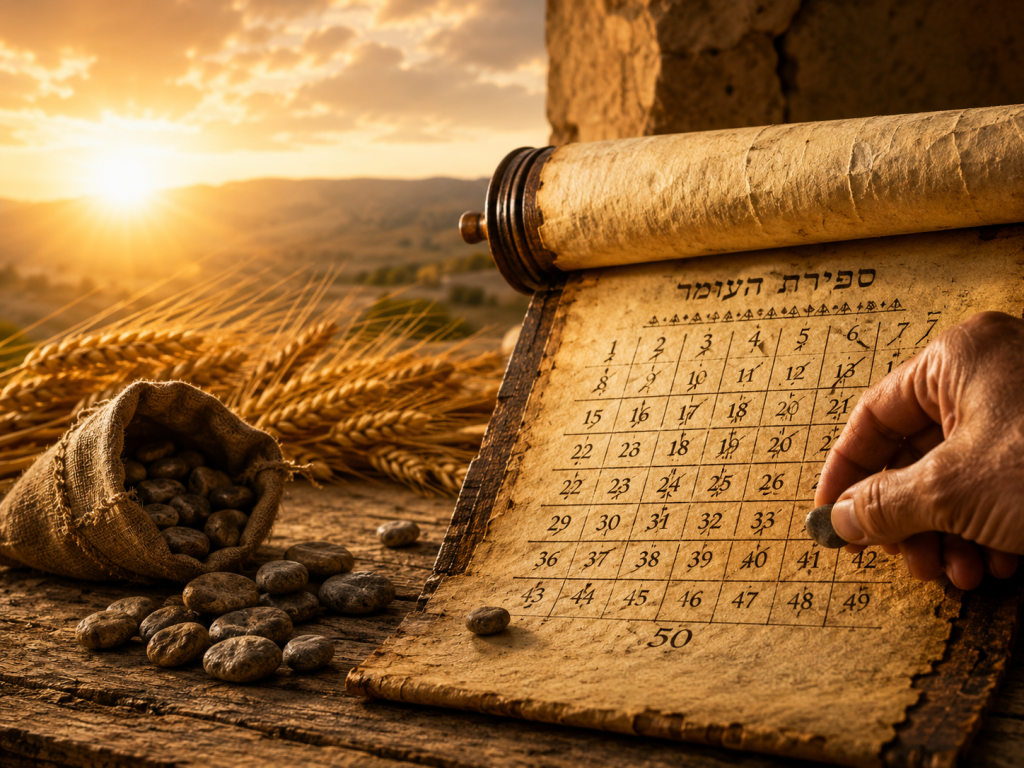
Counting Toward the Outpouring Few of the biblical festivals generate more discussion regarding their timing than Pentecost. While many believers recognize Pentecost as the day the Holy Spirit was poured out in Acts 2, fewer understand the biblical instructions that determine when the feast is to be observed. This study carefully examines the command to…
Read More Timing of Pentecost

The fall feasts call God’s people to repentance before judgment. Trumpets sounds the warning, the Day of Atonement finalizes the judgment. They are followed by the Feast of Tabernacles, which points to dwelling with God for eternity.

Day of Atonement

Day 1150 in Daniel’s Final Timeline The Day of Atonement represents the most solemn and decisive phase in God’s redemptive plan—the judgment that takes place before the Second Coming. In this teaching, we explore how this final priestly work parallels the cleansing of the sanctuary and reveals a present reality, not a future-only event. Just…
Read More Day of Atonement

Feast of Tabernacles

The Earth Made New The Feast of Tabernacles represents the final and complete fulfillment of God’s plan of redemption—when God will dwell with His people forever. This is not just symbolic language, but a real, future event described in Revelation, where the New Jerusalem descends and the tabernacle of God is with men. This teaching…
Read More Feast of Tabernacles

Understanding God’s calendar is essential to observing His timing. These articles examine key biblical principles—when a day begins, how the new year is established, and how to approach calendar questions—so that time itself is viewed through the lens of Scripture.

Biblical Calendar Principles

How to Assess Various Calendars to Establish Festival Dates The question of God’s calendar is not simply about dates—it is about authority. Scripture reveals that time is not determined by human systems, traditions, or institutions, but by God Himself through creation. From the beginning, God established clear markers for time: the sun, moon, and stars…
Read More Biblical Calendar Principles

Passover: The Night to Be Much Observed — One Night or Two?

Did the Passover meal, the death angel, and the Exodus occur over two separate nights—or all within one continuous sequence? The events surrounding Passover and the Exodus are among the most powerful in all of Scripture. Yet despite their importance, there remains significant confusion regarding the timing of these events—specifically, whether they occurred over one…
Read More Passover: The Night to Be Much Observed — One Night or Two?

When Does a Biblical Day Begin?

A Foundational Truth About God’s Appointed Calendar Many believers assume that a day begins at sunrise—but Scripture reveals a different pattern. From the very beginning in Genesis, the order is clear: evening comes before morning, establishing the structure of a full day. This is not a minor detail. It directly affects how we understand and…
Read More When Does a Biblical Day Begin?

Re-examining The “Day-Year Principle” (Book Excerpt)

(Below is chapter one from our book Re-Examining 1844: A Better Understanding, available here.) When interpreting the 2300 evening and morning prophecy of Daniel 8:14, as well as other prophetic timelines in Daniel and Revelation, Adventists use a “day-year principle”. This is the idea that when interpreting time periods in symbolic prophecies, every day in the prophecy…
Read More Re-examining The “Day-Year Principle” (Book Excerpt)
← Explore All Teachings